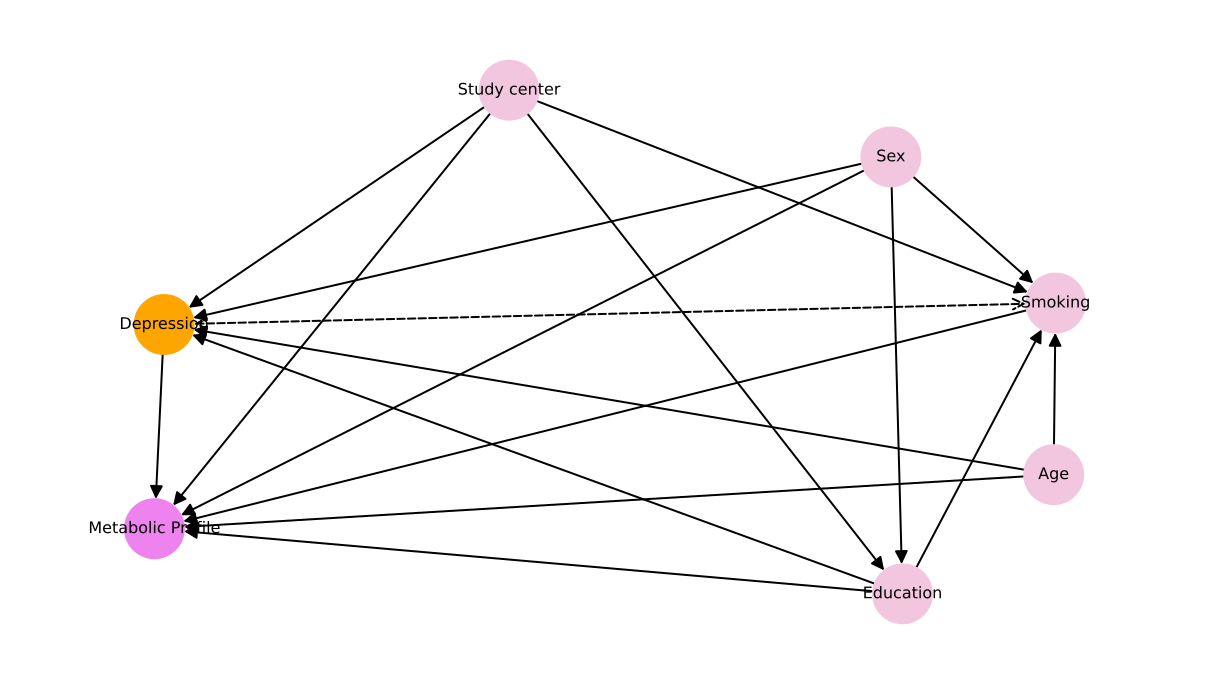

The directed acyclic graph (DAG) represents the hypothesized relationships between depression and metabolic profile, including potential confounding variables. Depression was considered the main exposure and metabolic profile the outcome of interest. The covariates included were age, sex, education, smoking and study center and they were selected based on their potential influence on both the exposure and the outcome. According to the DAG, the minimal sufficient adjustment set for statistical models contained age, sex, education, smoking and study center for estimating the total effect of depression on metabolic profile.
Search results for "0009-0005-4396-877X"
Searched by author name and ORCID, rather than nodes and edges.
-
-
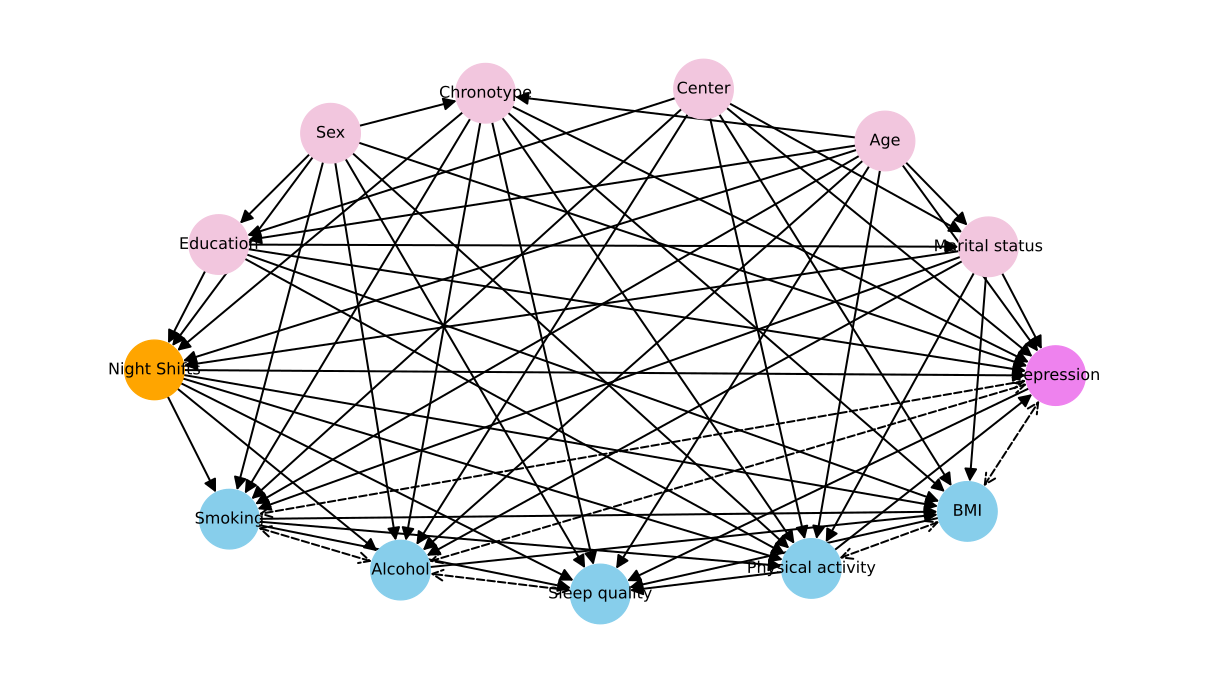
The directed acyclic graph (DAG) represents the hypothesized relationships between night shift work and depression, including potential confounding and mediating variables. Night shifts were considered the main exposure and depression the outcome of interest. Sociodemographic and lifestyle-related factors, including age, sex, education, marital status, smoking, alcohol consumption, BMI, physical activity, chronotype, sleep quality, and study center, were included as covariates based on their potential influence on both the exposure and the outcome. The DAG also includes interrelationships among these variables, reflecting plausible causal pathways identified in the literature. According to the DAG, the minimal sufficient adjustment set for statistical models …